Home
 
 
Receive Updates Via
facebook twitter subscribe to our newsletter rss feed
 

How to Make Kim Chi

Of the countless varieties of kim chi that are made in Korea, by far the most common and celebrated version is made with Napa cabbage.

Kim chi that's made with cabbage is loaded with indole-3-carbinol (I3C), a compound that is well recognized as a powerful cancer-fighting compound. Numerous studies indicate that I3C can offer protection against many different types of cancer and may even stop the growth of existing tumors.

You could hop on over to a local Korean market to buy a bottle of kim chi, but it may not be as healthy as you'd like, since most commercially prepared varieties are made with white sugar and shrimp.

To make healthy kim chi that still has lots of flavor and health-promoting compounds, start with a whole head of fresh Napa cabbage:
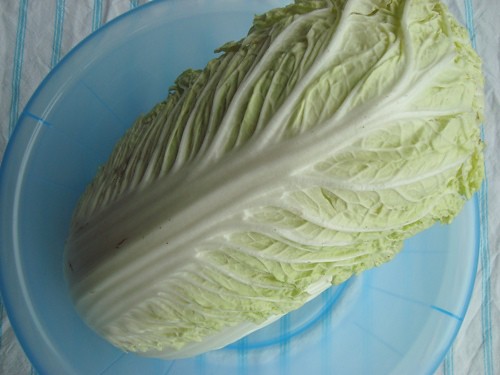
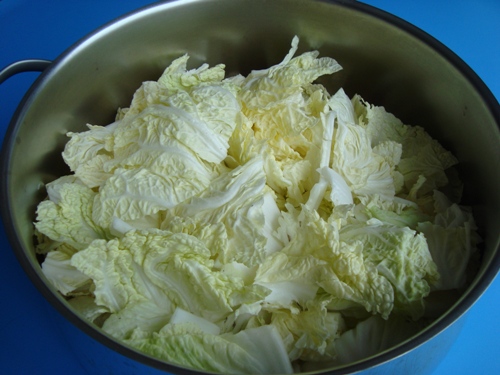
Separate the leaves and chop them up into bite-size pieces. These shreds of cabbage will shrink about 25% during processing, so no need to make them too small. And no need to clean them yet, as we'll be giving them a good rinse in a bit.
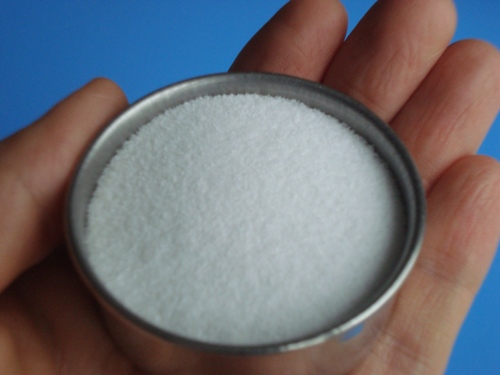
Measure out a quarter cup of sea salt.
And add it to a small bowl of warm water.
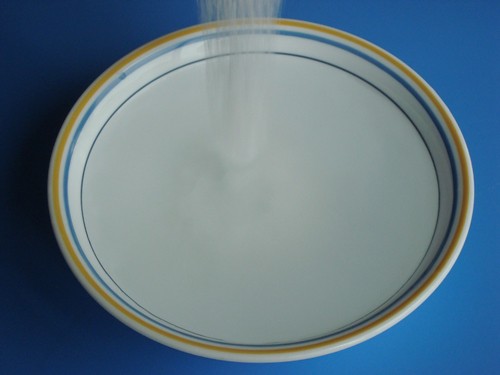
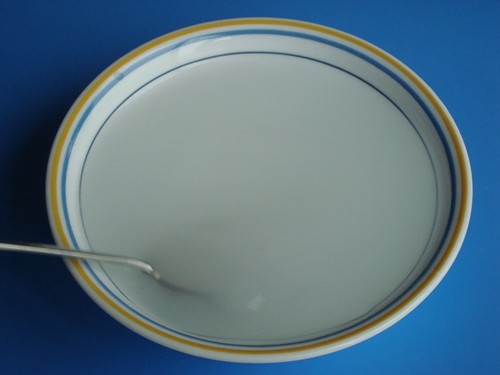
Give it a gentle stir until the salt is dissolved.
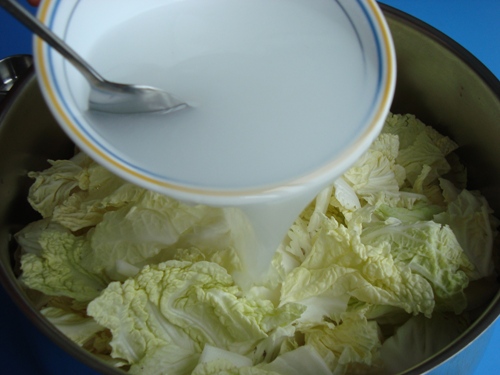
Now add the salt water to the cabbage and give the cabbage a light toss to distribute the salt water.
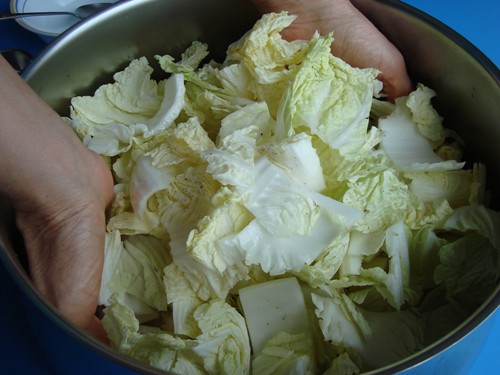
Now a bit of waiting time. The salted cabbage needs to sit at room temperature for about four hours. The salt will help draw moisture out of the cabbage, and will also act as a natural preservative.

Here's what the cabbage should look like after about four hours:
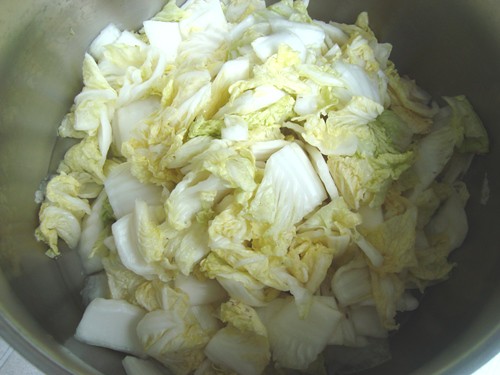
If you look closely, you'll see a small pool of salt brine at the bottom of the bowl.

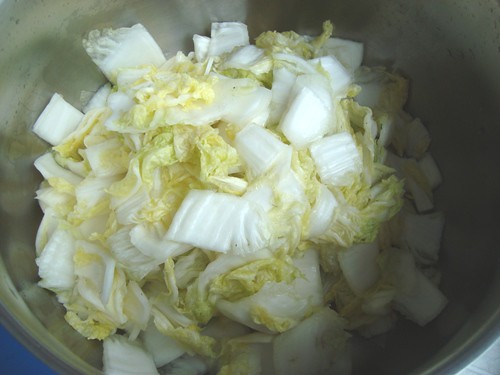
Now grease up your elbows and wash and strain the cabbage two or three times. You want to rinse off the salt water and return the cabbage to a large bowl.

Congratulations - this is the base for your kim chi.
Measure out a quarter cup of ko choo kah rhoo, also known as fine red chili flakes/powder. If you don't have easy access to a local Korean grocery store, you can order ko choo kah rhoo from the following site:
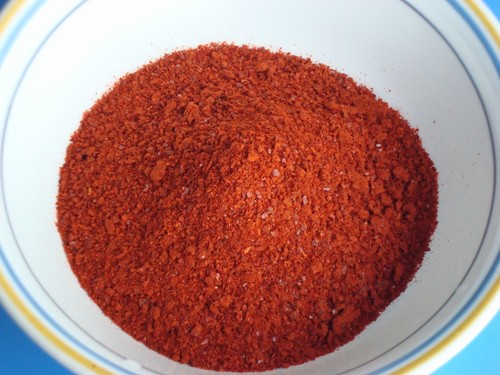
Crushed red pepper flakes

Add a quarter cup of warm water and mix with a spoon until the chili powder/flakes turn into a bit of a paste.
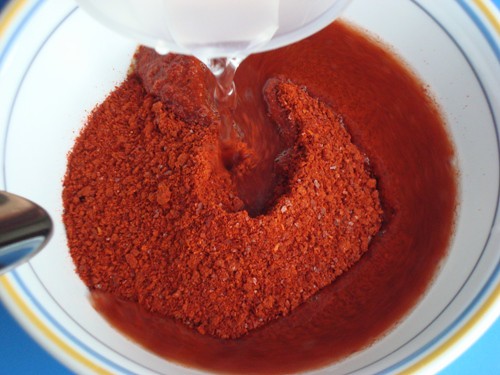
Transfer the red pepper paste to the cabbage.
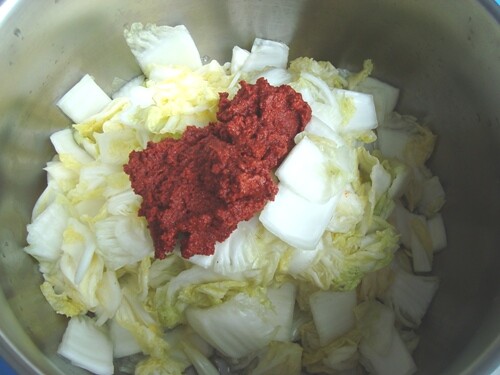
Plus a tablespoon of minced garlic.
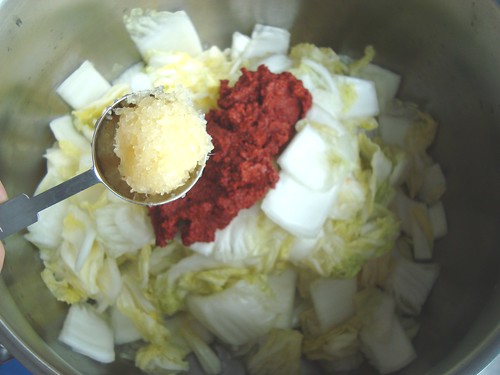
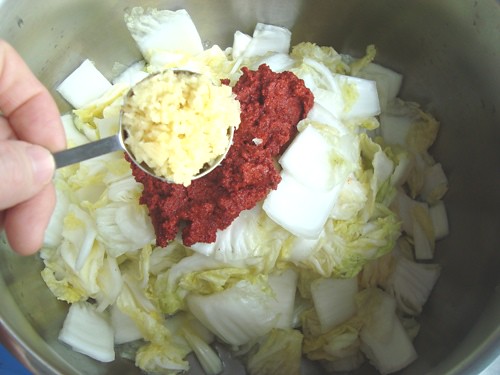
And a tablespoon of finely chopped/minced ginger.
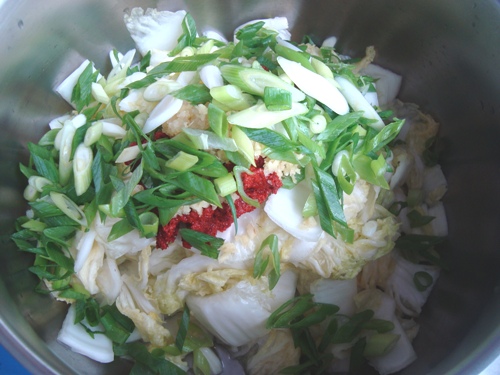
Three to four green onions, sliced.
Two tablespoons of anchovy sauce or fish sauce. If you prefer a vegetarian version, you can skip this step.
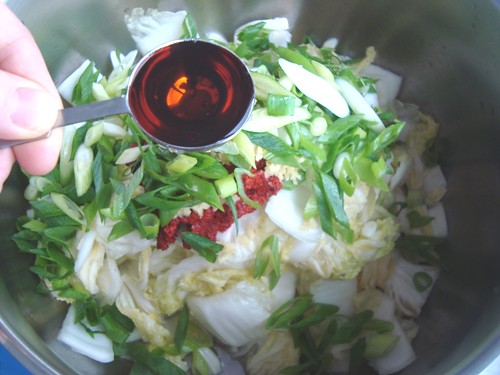
And now for the secret ingredient that sets this kim chi apart from most commercially prepared varieties: a concoction of half a ripe apple, half a ripe pear, and half a yellow onion, all blended up with one cup of water.
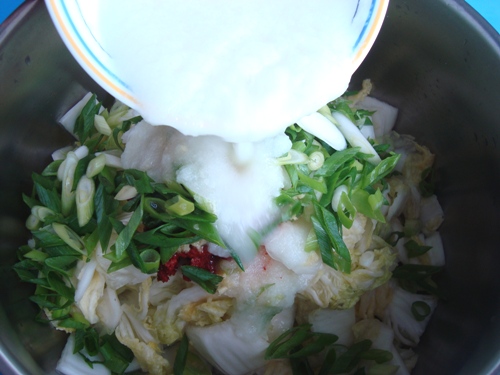
This apple/pear/onion blend adds a hint of natural sweetness to the kim chi - most commercial varieties simply add a cup of sugar.

Now put on a pair of gloves so that you can get right in there and give everything a solid toss and rubdown. Gloves are necessary, as the red chili flakes/powder will make your bare hands burn.
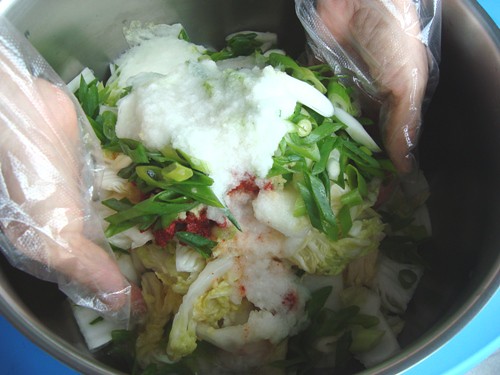
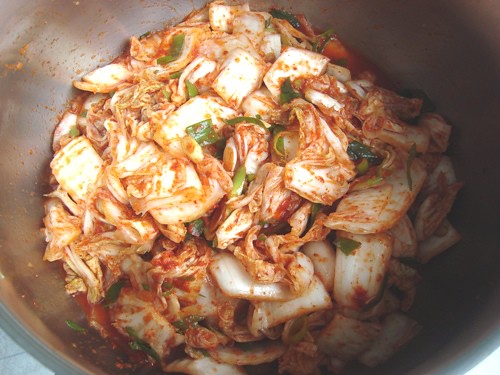
And voila, you have homemade kim chi that should please even the fussiest of Korean food critics.

You want to bottle the kim chi up in glass bottles, cap them, and leave them out at room temperature for 24 hours before refrigerating.

One word of warning: don't fill the jars right up to their tops, as the contents will expand a bit as the kim chi ferments, and filling the jars to their rims will likely result in leakage.

Here's a look from up top:
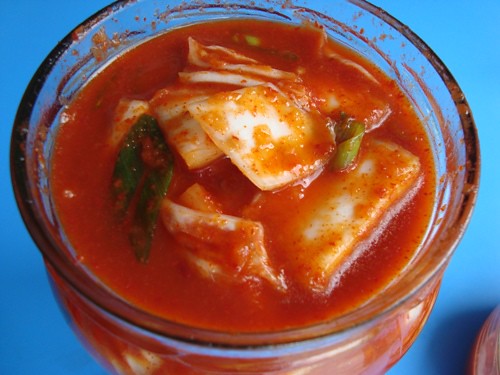
And from the front in all its glory:
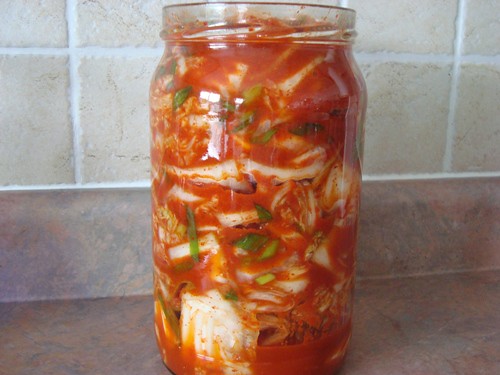
After 24 hours of fermentation out in room temperature, transfer capped bottles to the refrigerator and take portions out as needed. The kim chi will continue to ferment while refrigerated, and will keep for at least a month. The longer it ferments, the more sour it will get. Personally, I prefer kim chi that isn't sour at all, so we tend to use these bottles up within a week or so.

Click here for a printer-friendly version of this recipe (no pictures):

Healthy Kim Chi Recipe

Once you master the art of making your own healthy kim chi, you can enjoy it as a side dish to just about any main dish, and you can make it a component of dishes like Korean pancakes (bin dae duk) and a number of different Korean stews.

If you enjoy cabbage kim chi and you haven't had a look at our recipe for cucumber kim chi, have a peek here:

Cucumber Kim Chi Recipe

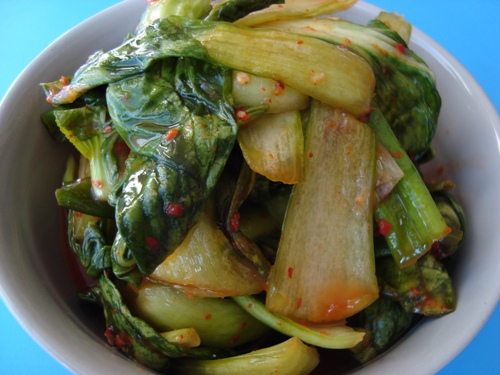
Addendum on June 12, 2010 - Here's a look at some Bok Choy kim chi that we made the other day using this recipe - we used clean Bok Choy leaves in place of cabbage:
.


To receive newly published articles and recipes like this one, stay in touch with us via

facebook twitter subscribe to our newsletter rss feed
Please Rate This
Your rating: None
Average: 4.9 (167 votes)


Kim chi

My step-grandmother is Korean and I have tried over the years to learn how to make different Korean dishes. One word of advice about the Kim chi. When putting it in the jar, it is necessary to push it down and really pack it in. The first time I made it, I just losely tossed it in the jar and it just doesn't ferment like it should. Also, I found that it is better to put the cabbage in a crock with the salt water in order to speed up the wilting process. Do not use plastic. I put my cabbage in a plastic bowl and 24 hours later it was still not wilted! Thanks for your great recipes!

Thanks

Your additional comments are helpful. :)

Kim Chi

My friends and I have been desperately looking for a kim chi recipe, and this one looks like a winner. We visited Korea a couple of weeks ago and we were captivated by the taste of kim chi and Korean food in general. Thank you for this...

Kim Chi recipe is very good!!

Thanks for the recipe, it is very tasty. At first I thought it was way too hot, but I'm getting accustomed to it. We have an Asian Market in my area, but I could not find the exact ko choo kah rhoo, but I asked a fellow shopper. She said that that was Korean and they were real fussy about that stuff, and that this was a Chinese Market. :)

I did get crushed red pepper flakes, it looked the same. And it's HOT!

I do have a question about the recipe though. Are there a lot of healthy
probiotics in the Kim Chi, and can one add cultures to make it more potent?

Regards,

-Peter

Hi I have some gochujang

Hi I have some gochujang paste which must be pretty much the same as the red pepper paste right? just with added stuff. And I need to use it up so I was wondering how much I should be using if Im just going straight with gochujang paste : )

How to Make Kimchi

I posted in another post my love of really good, legitimate kimchi. I lived in Taegu, Chungmu, Chonju, and Pusan (Gupo) for about two years and really came to appreciate kimchi. My favorite is oe kimchi or cucumber kimchi but this type of kimchi, if made well, is great on white rice or even just by itself. I never knew how it was made step by step, which you provided with the excellent instructions. As I thought kimchi had to be put into the ground for optimal fermentation, as I saw it done a lot in south Korea, of course, I thought I couldn't make it here. I can see you can now.

Thanks!

GR

Love Your Recipes

Hello Dr Kim

Thanks for sharing and putting up the pics step by step. I love them and will go out to buy the ingredients to fix a "kim Chee" for my friends for a "Korean/Japanese meal this weekend.Think they are going to love it !

Merry Christmas
Cheryl

This Kimchi Recipe is amazing

Dr Kim,

I admit that I didnt like Kimchi cause I didnt know what was in it. After reading your recipe,I went to my Korean market in the Bronx, Got me some Napa Cabbage and some korean red pepper flakes. I followed your recipe and tara !!! amazing piece of culinary art. I love it. Thank you

My first time

This was so useful in my first time making kimchi. I have been buying kimchi from stores in those glass jars forever. I decided to try and make my own, as it is probably healthier and I would know what goes in it. It is right now fermenting in the cabinets as I have just finished making it (literally). It was an excited experience staying up all night to wait for it to wilt! Hopefully the work will pay off, but I can't wait to have my first taste!

Yummy Kimchi

I love this recipe! I had a lot of Kabu (Japanese turnips)in the garden that I did not know what to do with! I made Kimchi with them and the leaves. I also did not have any ko choo kah rhoo so I used the kind of red chili flakes that are for pizza sprinkles! It turned out a little different than regular Kimchi, because the flakes aren't ground as fine as ko choo kah rhoo, but it is going to turn out different anyway, right?! My daughter made some Kimchi soup with it and some other Kimchi that I had in the fridge from the Korean market. Yummy! I am taking a trip next week to San Diego so I will pick up some ko choo kah rhoo from the Korean market, Zion and make some more.
Thank you Dr. Kim!


More Natural Health Resources

Professional Grade Target Formulas

Raw Organic Protein Powders