


You are here
How to Make Your Own Soy Milk
Contrary to popular belief, soy can be a healthy food choice for the masses. In Korea and Japan, most households enjoy soy in many forms daily. The key is knowing how to prepare it for optimal digestion and nutritional benefit.
If you've never made your own soy milk, I highly recommend that you give it a try. Freshly made soy milk provides flavor and richness that I've yet to find in any store-bought variety. Plus, when you make your own, you can have an entire pitcher of rich, creamy soy milk for about 20 cents.
First, you'll need to find dry soybeans, which are available at most grocery stores in the section that houses dry beans and lentils.
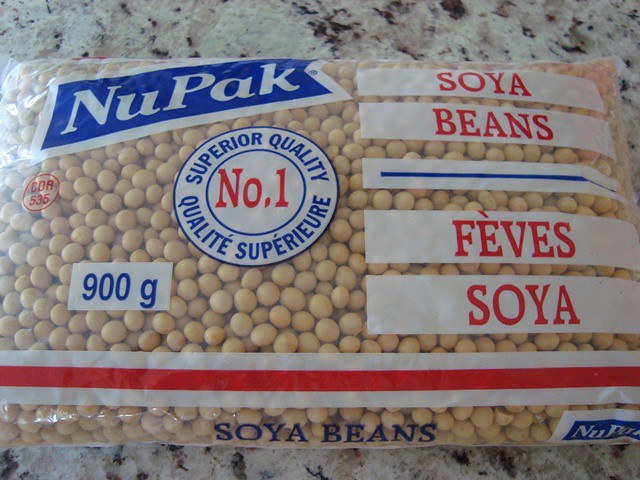
This 900-gram bag costs about two dollars at our local grocery store, and as you'll see, just one cup of dry beans produces a generous four to five cups of fresh soy milk.
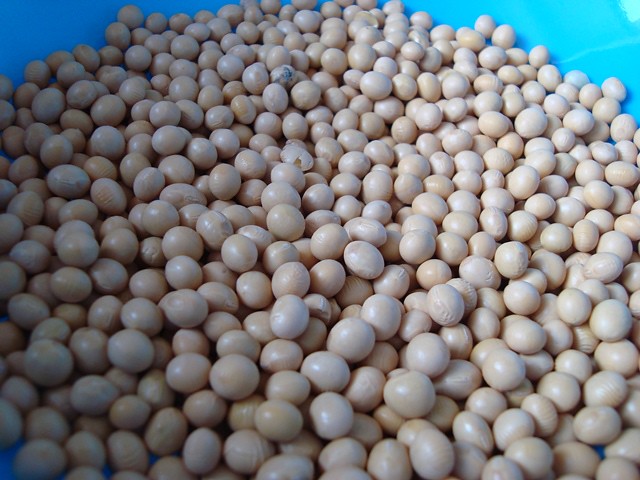
Here's a close look at dry soybeans:
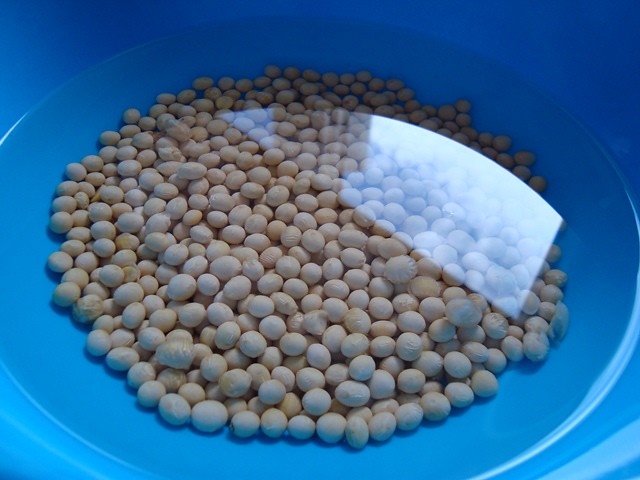
Add one cup of dry soy beans to a large bowl, give them a rinse, then allow beans to soak in plenty of water for six hours.
After soaking for six hours, drain water and transfer beans along with enough fresh water to cook beans for 15 minutes to a large pot. Use the largest pot you have, as boiling soybeans produces quite a lot of bubbles. Be precise with the 15 minute mark - this is 15 minutes of actual boiling time, no more or less, as the goal is to cook the beans, but to minimize sapping of nutritional content. Keep the pot covered while your beans are boiling, and only remove lid briefly to blow away bubbles as needed.
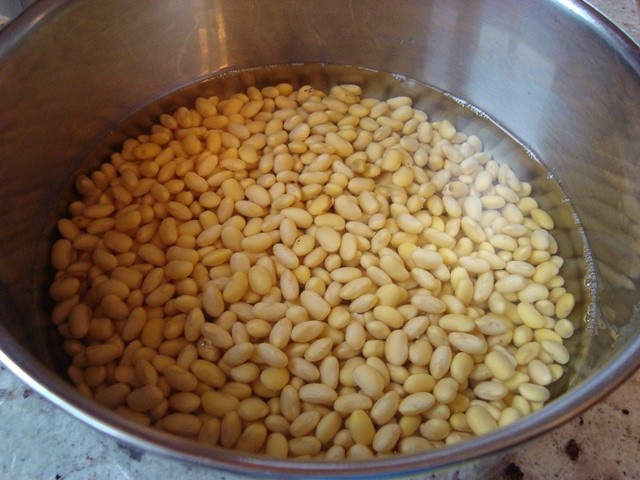
Taste test a soybean - it should taste cooked, but still have a nice crunch.
Once finished boiling, use a strainer to transfer cooked soybeans to a bowl in the sink. Cover beans with fresh water and gently "roll" them between your hands to remove their translucent skins.
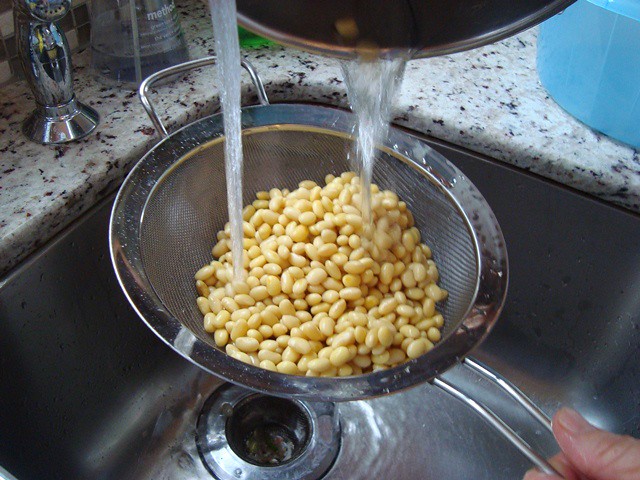
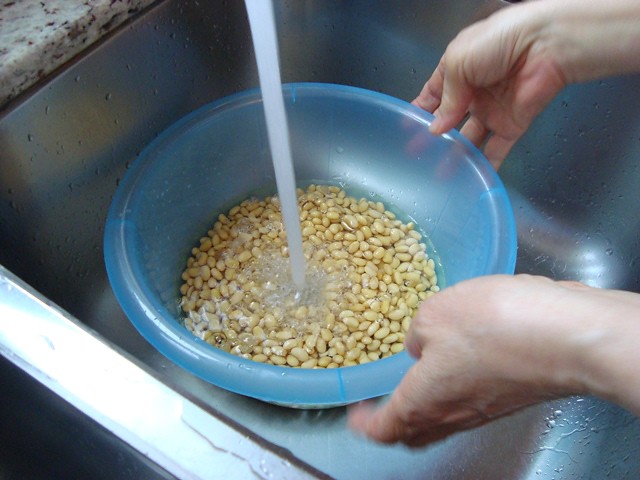
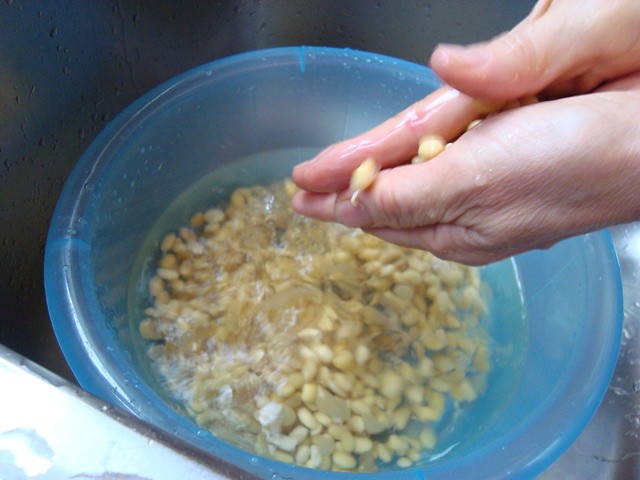
You can easily separate the thin translucent skins from the soybeans by slowly pouring off the skins and water into a strainer.
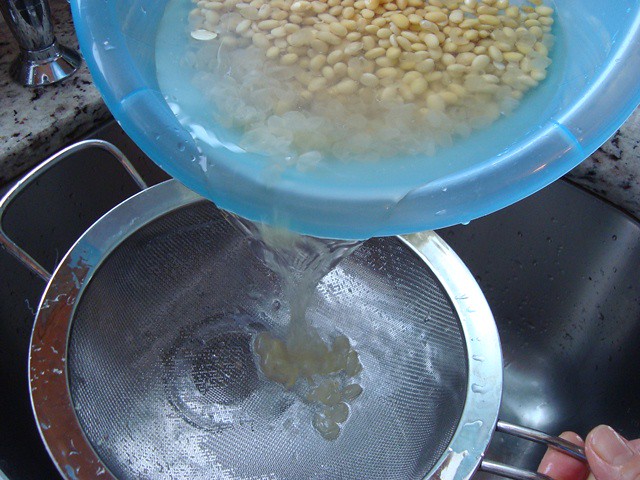
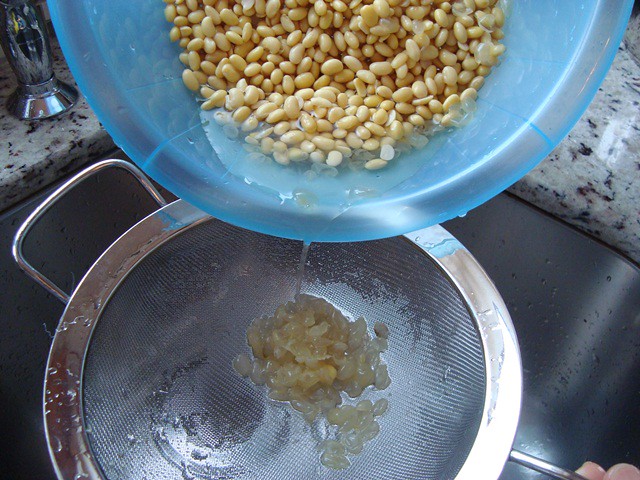
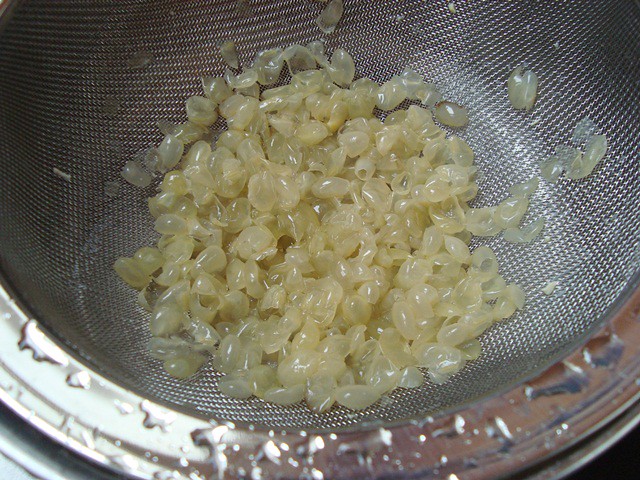
Transfer cooked, skinless soybeans to your blender.
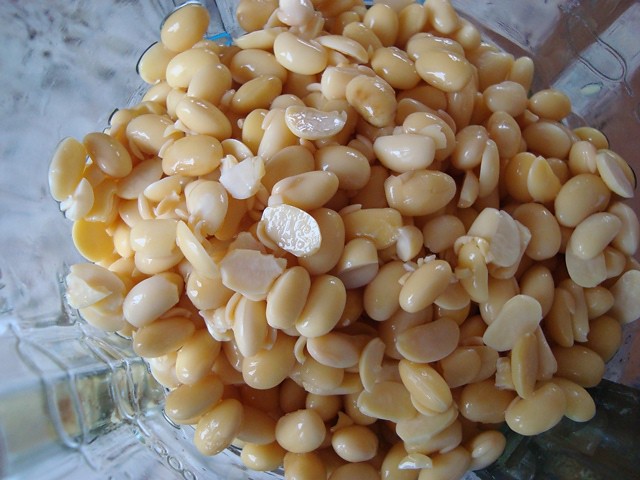
If your blender is large enough, add four cups of fresh water. If your blender can't take four cups of water comfortably, then add just two cups of water.
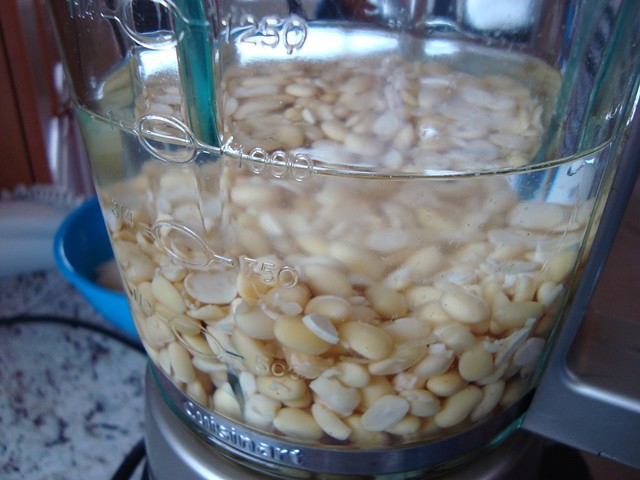
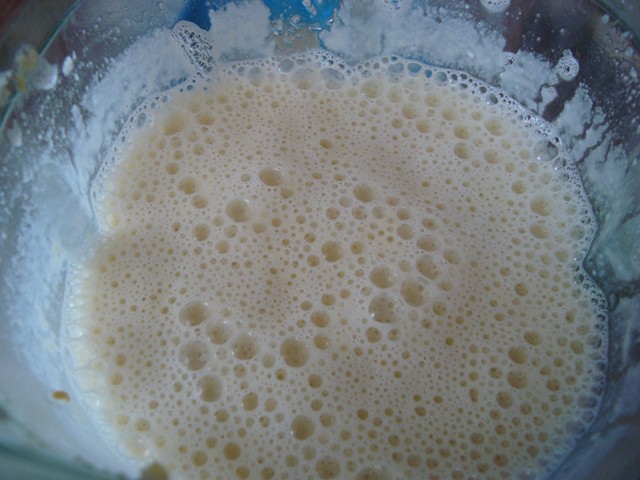
Blend for at least a minute on high, or as long as it takes to transform your beans and water into soy milk - it should end up looking something like this:
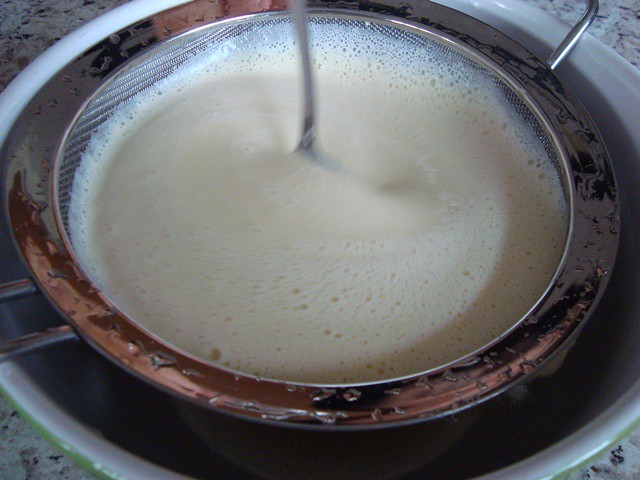
To give your soy milk a smooth quality, pour it through a strainer into a large container or bowl. You'll need to use a spoon to help assist this filtration process. If you used only two cups of water in the blender, this is where you can gradually add two more cups of water as you filter your soy milk.

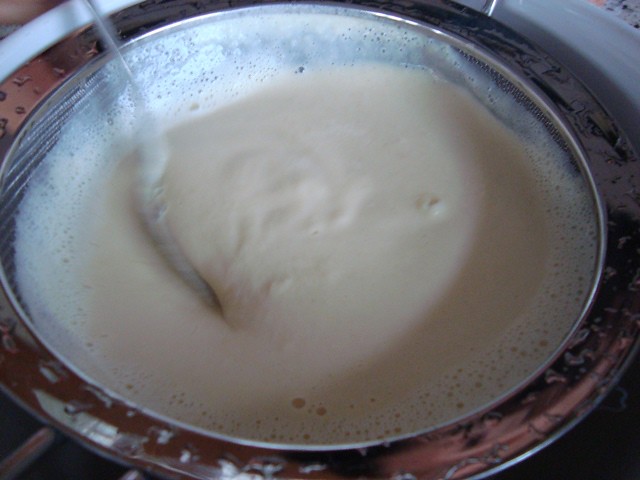
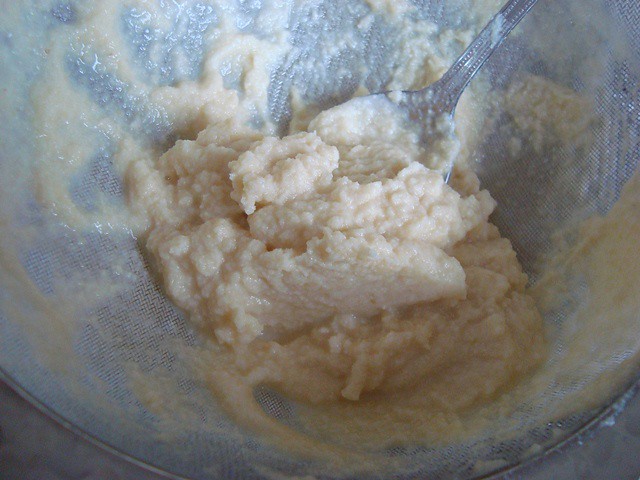
Eventually, you'll be left with some soy paste, which you can add to Korean pancakes (bin dae duk), or even to smoothies for extra protein content.
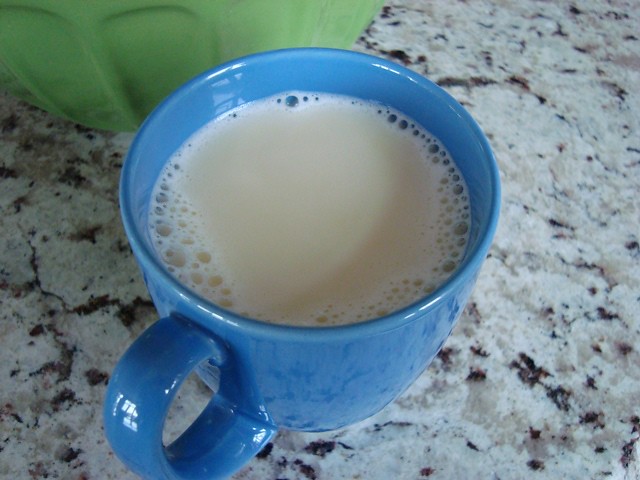
Voila - freshly made soy milk:
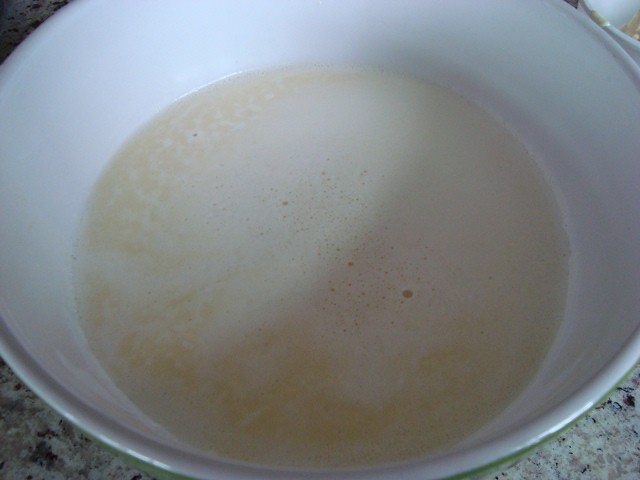
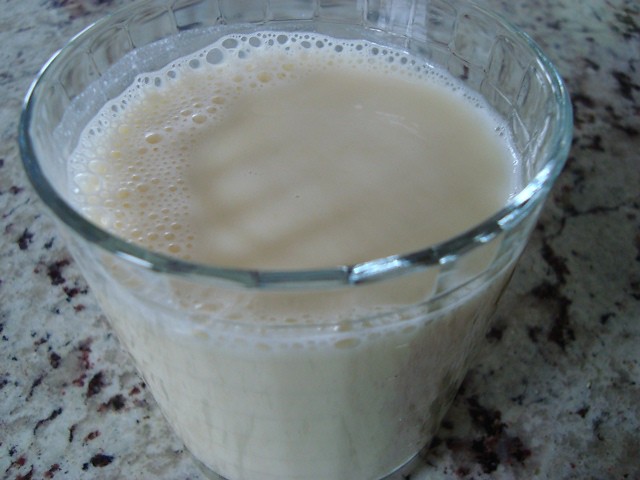
Once you have a taste of fresh soy milk, I think you'll agree that store-bought varieties don't do justice to real soy flavor. When served cold, it's absolutely delicious without a single additive, though you can always add your own vanilla for a little boost of love.
Now a huge bonus: Once you have chilled soy milk, you can easily make an authentic Korean dish: Kohng Gook Soo, Korean for "bean soup," made by combining seasoned chilled soy milk with freshly cooked noodles plus your favorite vegetables. This is a summertime favorite in Korea, perfect for cooling your body down and satisfying the heartiest of appetites.
Just combine freshly cooked noodles (al dente is best) with any vegetables you feel like (julienned carrots and diced green onions are an excellent combination). Be sure to give your noodles a good rinse with running cold water in a strainer before you serve them.
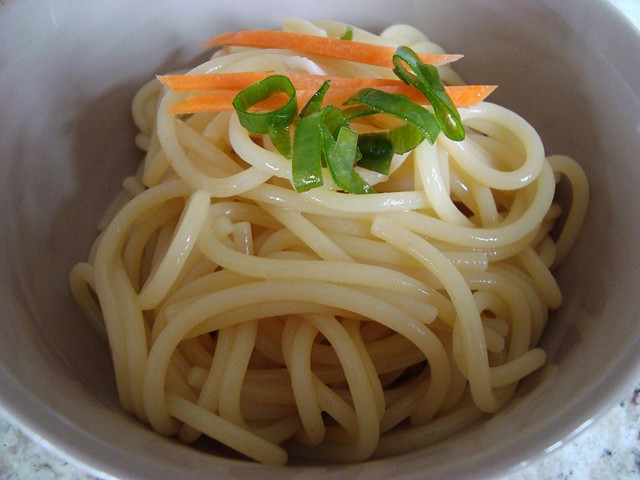
Now season your chilled soy milk by adding sea salt, to taste. Then add a generous amount of chilled seasoned soy milk to your noodles.
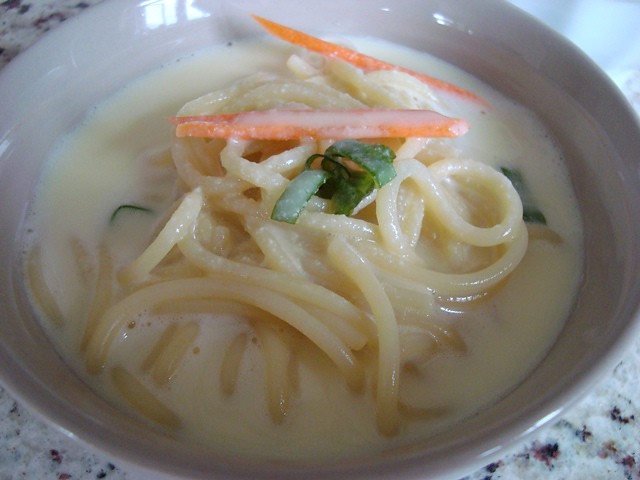
Koreans enjoy kohng gook soo by taking a good sip of the broth with every mouthful of noodles and vegetables.
If you give fresh soy milk and this Korean noodle dish a try, please let us know what you think via the comments section below.
Please note that you should keep your fresh soy milk refrigerated and use it up within 2 to 3 days. Give your soy milk a good shake before each use.